

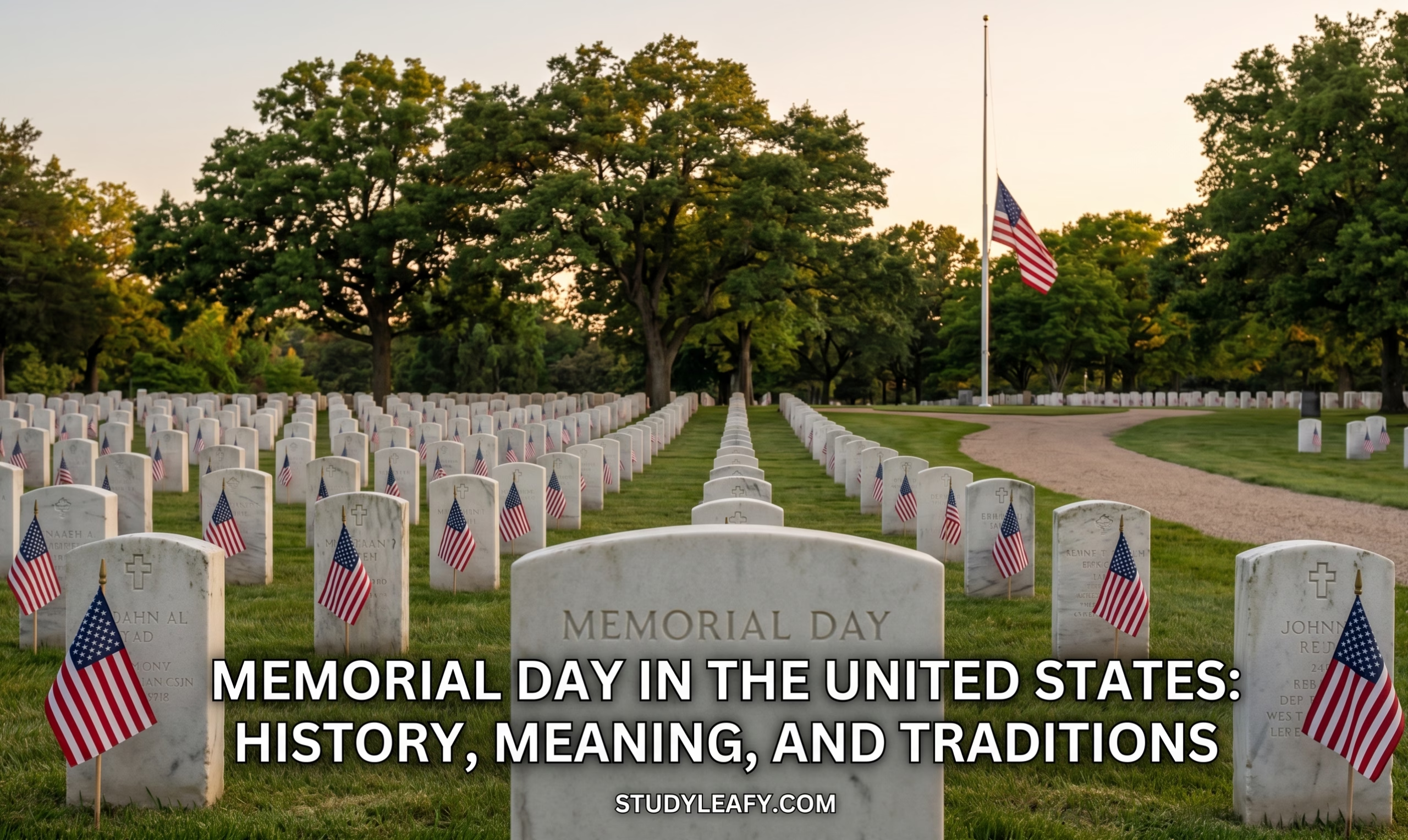
Memorial Day is one of the most meaningful holidays in the United States. It is observed on the last Monday in May and is dedicated to honoring the men and women who died while serving in the U.S. military. For many Americans, the day is connected with flags, parades, cemetery visits, family gatherings, and the beginning of summer. But behind the long weekend is a serious and important purpose: remembrance.
Memorial Day is not simply a day off from school or work. It is a day set aside to think about sacrifice. It asks Americans to remember people who gave their lives in military service and to recognize the cost of war for families, communities, and the nation as a whole.
Because Memorial Day arrives near the end of the school year and the beginning of summer, it can be easy to see it only as a seasonal holiday. Many families travel, cook outdoors, attend sports events, or spend time with relatives. These traditions are part of American life, but the deeper meaning of Memorial Day should not be forgotten. At its heart, Memorial Day is a day of gratitude, memory, and respect.
What Is Memorial Day?
Memorial Day is a federal holiday in the United States. It honors members of the U.S. armed forces who died while serving their country. This includes people who died in wars as well as those who died during military service in other circumstances.
A helpful way to understand Memorial Day is to compare it with Veterans Day. Memorial Day honors those who died in military service. Veterans Day, observed in November, honors all military veterans, including those who are still living. Armed Forces Day, another American observance, recognizes those currently serving in the military.
This difference matters because Memorial Day has a special tone. It is not mainly a celebration of military power or victory. It is a solemn day of remembrance. Its purpose is to honor lives lost and to help the nation remember the human cost of service.
The Civil War Roots of Memorial Day
The history of Memorial Day begins after the Civil War, one of the most painful periods in American history. The Civil War lasted from 1861 to 1865 and caused enormous loss of life. Hundreds of thousands of soldiers died, and nearly every community was touched by grief.
After the war, families and neighbors looked for ways to honor the dead. In many towns, people visited cemeteries, placed flowers on graves, cleaned burial sites, and held memorial ceremonies. These early acts of remembrance were deeply personal. They came from grief, respect, and the need to make sense of loss.
At first, the holiday was often called Decoration Day because people decorated the graves of fallen soldiers with flowers, flags, and wreaths. The name reflected the central tradition of the day: caring for the resting places of those who had died.
Several communities claim to have held some of the earliest Memorial Day observances. Towns and cities in different states organized ceremonies after the Civil War, and historians have studied many of these claims. This shows that Memorial Day did not begin in only one simple moment. It grew from a national experience of mourning. Across the country, people were searching for a way to remember the dead.
Decoration Day and General John A. Logan
One of the most important steps in the development of Memorial Day came in 1868. General John A. Logan, a Union veteran and leader of a veterans’ organization called the Grand Army of the Republic, called for a national day of remembrance for soldiers who had died in the Civil War.
He chose May 30 as the date for Decoration Day. The date was likely selected because flowers would be blooming in many parts of the country, making it possible to decorate graves. On that first national observance, ceremonies were held in many places, including Arlington National Cemetery near Washington, D.C.
Decoration Day became especially important in Northern states in the years after the Civil War. Families, veterans, and communities gathered to honor Union soldiers. Over time, as the United States moved further away from the Civil War and experienced new conflicts, the meaning of the day expanded. It eventually became a day to honor all Americans who died in military service, not only those who died in the Civil War.
From Decoration Day to Memorial Day
The name “Memorial Day” became more common during the twentieth century. After World War I, the holiday’s meaning broadened because Americans wanted to honor service members who had died in all U.S. wars. The country had changed, and the holiday changed with it.
For many years, Memorial Day was observed on May 30. In 1968, Congress passed the Uniform Monday Holiday Act, which moved several federal holidays to Mondays in order to create long weekends. Memorial Day was moved to the last Monday in May, and the change took effect in 1971.
This change made Memorial Day more convenient for travel and family gatherings, but it also created a concern. Some people worried that the meaning of the holiday might become weaker if Americans thought of it mainly as a three-day weekend. That concern still exists today. Memorial Day can be both a time for family and a time for reflection, but its purpose should remain clear.
Memorial Day Traditions in the United States
Americans observe Memorial Day in many different ways. One of the oldest traditions is visiting cemeteries and memorials. Families may place flowers, wreaths, or small American flags on the graves of fallen service members. In national cemeteries, volunteers often help place flags at thousands of graves, creating a powerful image of remembrance.
Parades are also common. Many towns and cities hold Memorial Day parades with veterans, marching bands, local officials, scouts, students, and community groups. These parades often include moments of silence, patriotic music, and ceremonies at monuments or town squares.
The American flag plays an important role on Memorial Day. It is traditionally flown at half-staff until noon, then raised to full-staff for the rest of the day. This custom reflects both mourning and resolve. The morning honors those who died, while the afternoon represents the nation’s commitment to continue with gratitude and purpose.
Another tradition is the National Moment of Remembrance, observed at 3:00 p.m. local time. Americans are encouraged to pause for one minute to remember those who died in service. This simple act can be done anywhere: at home, at a park, during a family gathering, or even while traveling.
The Symbolism of Flowers and Poppies
Flowers have been part of Memorial Day since its earliest years as Decoration Day. They symbolize respect, memory, and the beauty of life. Placing flowers on a grave is a quiet act, but it carries deep meaning. It says that the person buried there has not been forgotten.
Red poppies are also connected with military remembrance, especially after World War I. The symbol became famous because of the poem “In Flanders Fields,” which describes poppies growing on battlefields where soldiers had died. In the United States and other countries, poppies came to represent remembrance for those lost in war.
Although poppies are more strongly associated with some other remembrance days around the world, they still appear in Memorial Day events and fundraising efforts in the United States. Like flags and flowers, they help people express respect when words may not feel like enough.
Memorial Day and the Start of Summer
Memorial Day is often called the unofficial start of summer in the United States. Schools are ending or preparing to end, swimming pools open, families plan vacations, and many people enjoy barbecues or outdoor activities. Stores also run Memorial Day sales, and the holiday weekend is one of the busiest travel periods of the spring.
These customs are not wrong, but they can become a problem if they completely replace remembrance. A family cookout, for example, can still include a moment of gratitude. A trip to the beach can still begin with a conversation about why the holiday exists. Enjoying freedom and remembering sacrifice do not have to be opposites.
In fact, many people would say that spending time with family is one way to honor those who died protecting the country. The key is awareness. Memorial Day becomes more meaningful when Americans enjoy the day without forgetting its purpose.
Why Memorial Day Matters
Memorial Day matters because memory matters. Nations, like families, need moments to remember the people who came before them. Without remembrance, sacrifice can become abstract. A holiday like Memorial Day helps people connect history with real lives.
For students, Memorial Day is an opportunity to learn more than dates and facts. It opens the door to questions about citizenship, service, war, peace, duty, and responsibility. It also teaches respect. Even students who do not have military members in their families can understand the importance of honoring people who gave their lives.
Memorial Day also reminds Americans that freedom has a cost. This does not mean every person must think about war in the same way. People can have different opinions about history, politics, and military decisions. But honoring those who died in service is a human act before it is a political one. It recognizes courage, loss, and the grief of families who never welcomed their loved ones home.
How Students Can Observe Memorial Day
Students can observe Memorial Day in thoughtful and age-appropriate ways. They can learn the history of the holiday, read about a local memorial, write a reflection, attend a community ceremony, or help place flags at a cemetery. They can also ask respectful questions of family members who have military experience.
Writing is especially useful in the classroom. A student might write a paragraph explaining the difference between Memorial Day and Veterans Day. Another student might research a war memorial in their town or state. Younger students can create drawings or cards that express gratitude and respect.
The goal is not to make the holiday sad for students. The goal is to help them understand why remembrance is important. A thoughtful Memorial Day lesson can teach history, empathy, and citizenship at the same time.
Frequently Asked Questions About Memorial Day
When is Memorial Day celebrated?
Memorial Day is observed on the last Monday in May each year in the United States.
What does Memorial Day honor?
Memorial Day honors the men and women who died while serving in the U.S. military.
What was Memorial Day originally called?
Memorial Day was originally known as Decoration Day because people decorated the graves of fallen soldiers with flowers and flags.
Is Memorial Day the same as Veterans Day?
No. Memorial Day honors those who died in military service. Veterans Day honors all U.S. military veterans, including those who are living.
Why do Americans visit cemeteries on Memorial Day?
Many Americans visit cemeteries to place flowers, flags, or wreaths on the graves of fallen service members as an act of remembrance and respect.
Conclusion
Memorial Day is a holiday with deep roots in American history. It began after the Civil War as communities searched for ways to honor the dead. Over time, it grew from Decoration Day into a national holiday dedicated to remembering all Americans who died in military service.
Today, Memorial Day includes many traditions: cemetery visits, flags, parades, ceremonies, flowers, poppies, family gatherings, and moments of silence. It also marks the beginning of summer for many families. But the central meaning of the day remains the same.
Memorial Day asks Americans to remember. It asks them to look beyond the long weekend and think about the men and women who did not return home. By honoring their sacrifice, the country keeps their memory alive and teaches future generations that gratitude, respect, and remembrance are essential parts of national life.

